Saint Jerome's feast day brings fresh attention to the place of Scripture in prayer as the Catholic Biblical School of Michigan points readers toward study and daily practice.
Vermeulen grew up with a children's Bible storybook and received a Bible for her First Communion. Scripture did not become central to her life right away.
Today, Colleen Vermeulen serves as Director of Mission at the Catholic Biblical School of Michigan. She is also a parishioner at Christ the King in Ann Arbor. Her reflection arrives around Saint Jerome's feast day, when the Catholic Church remembers the importance of Sacred Scripture and the fourth-century biblical scholar who translated the Bible into Latin.
The local setting is diocesan. It is not a civic program.
For Farmington-area readers, the ministry belongs to a wider regional Catholic network. The Diocese of Lansing lists 36 Catholic schools across 10 counties, including four regional high schools. That places Bible study and faith formation within a large diocesan education and parish structure. The diocese has continued publishing school, parish and faith-formation updates in late September 2026. Diocesan school updates provide that institutional background.
The distinction matters. The Catholic Biblical School is not identified here as a program of the City of Farmington, the City of Farmington Hills or Farmington Public Schools. The reviewed material also did not document a municipal grant, school-board action, enrollment figure or public policy change tied to the ministry. Its setting is religious and diocesan. Its potential audience includes residents who take part in the civic, school and neighborhood communities served by Farmington Voice.
Recent diocesan coverage of migrants and refugees follows a similar pattern. It focuses on personal testimony, parish life and Catholic formation. That helps explain why Vermeulen's account centers on lived practice instead of enrollment statistics or a formal program announcement. The reviewed results did not provide an independent update on Vermeulen. They also did not confirm a new expansion, controversy, funding change or policy affecting the Catholic Biblical School of Michigan.
From information to prayer
In high school, a Baptist friend asked Vermeulen whether she knew Jesus as her Savior. She turned to the New Testament for clarity and began looking for proof texts. At that stage, intellectual curiosity drove the effort more than prayer.
Later, she made a conscious decision to become a disciple of Jesus. Her relationship with the Bible did not change overnight. Scripture still felt like information. Reading it could feel like a chore instead of essential spiritual nourishment.
The shift took years.
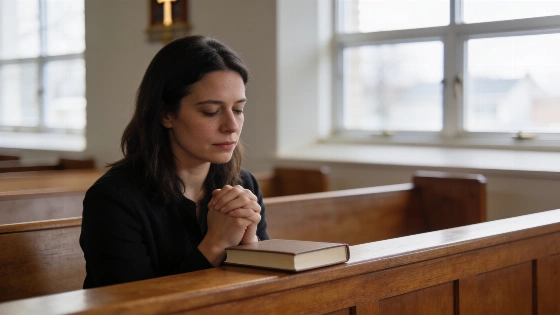
Vermeulen committed herself to spending time each day in prayer with the Word. Repetition changed the habit. Over time, the practice replaced what she described as drifting in prayer with a regular encounter with the Lord through Sacred Scripture.
Study with the Church
The Catholic Biblical School Ministry is Vermeulen's way of helping other followers of Jesus approach the Bible with what she describes as the mind of the Church and the guidance of the Holy Spirit. The ministry operates throughout the Diocese of Lansing and beyond.
Its purpose is practical. It helps people take a step toward a more fruitful relationship with God as encountered in the Holy Scriptures. That focus speaks to readers who own a Bible but do not have a clear way to pray with it. Vermeulen's account presents the process as a learned practice, not an instant breakthrough.
Saint Jerome's well-known warning that ignorance of Scripture is ignorance of Christ gives the reflection its central claim. Scripture is not presented merely as background material for religious knowledge. It is treated as part of discipleship and prayer.
The public record also has limits. No reviewed Farmington Public Schools board materials, Oakland County administration notices or State of Michigan departmental registries were cited as establishing a formal partnership or regulatory action involving the Catholic Biblical School. Those agencies remain reference points for civic and public-school matters. The material available here supports describing the ministry as a diocesan faith-formation resource.
That is the boundary.
Ways to begin
The Catholic Biblical School of Michigan points readers toward two accessible resources. One is "Simply Scripture," a guide for daily prayer with the Bible. The other is a set of weekly reflections on the Sunday Mass reading.
Readers can find earlier community coverage on Farmington Voice. The ministry's resources include the Simply Scripture book at Ave Maria Press, the Weekly Sunday Mass Reflections at cbsmich.org/wordoftheweek and the Catholic Biblical School of Michigan at cbsmich.org. The Diocese of Lansing has also continued publishing testimony-driven coverage of Catholic formation and parish life, including its reflection on migrants and refugees.
The lesson is direct. A stronger prayer life may begin with a modest daily commitment and a reliable guide. Vermeulen's experience makes the Catholic Biblical School of Michigan worth considering for anyone who feels adrift with Scripture. Its approach connects study, prayer and the Church's tradition without promising a shortcut.