Plans for a new Livonia police station have been shelved indefinitely after city officials confirmed that funding options have dried up and contracts with architects and builders have expired, leaving the 1961 facility in continued use
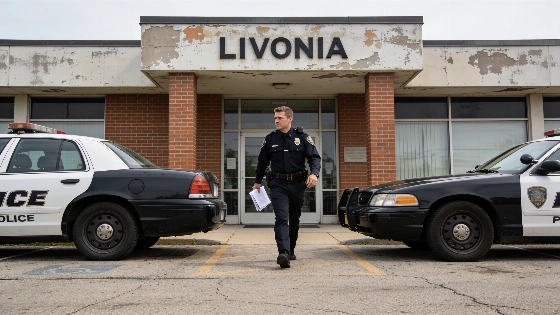
Livonia's effort to build a new police headquarters has come to a standstill, with city officials confirming that all plans are now on indefinite hold due to a lack of viable funding and the expiration of key contracts. The city's 65-year-old police building will remain in use for the foreseeable future, despite repeated warnings from officials about its cramped conditions and aging infrastructure.
The decision follows months of political disagreement among city leaders and residents, which began after voters overwhelmingly rejected a $150 million bond proposal in the summer of 2025. That package would have funded a new police station as part of a broader Civic Center campus overhaul, but the measure failed by a margin of nearly two to one, according to city records.
Funding options exhausted
After the failed bond, Livonia's administration explored alternative financing, including a separate bond issue of up to $45 million that would not have required voter approval. The plan relied on redirecting $2.4 million in annual savings from retiree health care changes. However, Mayor Maureen Miller Brosnan announced that rising construction costs have now made the project unaffordable, and all contracts with architects, engineers and construction managers have lapsed. "The funding opportunities to build a new police station have evaporated at this point," Brosnan said, adding that the city will instead focus on maintaining existing facilities in the upcoming 2026-27 budget cycle.
City Council discussions on the police headquarters have stalled since April, when the topic was last referred to the Committee of the Whole. No further action has been scheduled, and several council members indicated there are no immediate plans to revisit the issue.
Disagreements over design and location
While city officials agree that the current police building, constructed in 1961, is outdated and inadequate for modern needs, consensus on how to replace it has proven elusive. Councilman Brandon McCullough, who manages facilities for Northville Township, argued that the administration's proposed design was too expensive and objected to the suggested location near Five Mile and Farmington Road, citing concerns about wetlands. The administration's plan would have placed the new station adjacent to the 16th District Court, but McCullough maintained that a more cost-effective and suitable solution was possible if the city pursued a different approach.
Councilwoman Carrie Budzinski acknowledged that the police headquarters issue became a political flashpoint, but expressed hope that the recent renewal of an operating millage for police and fire services-separate from infrastructure funding-could help rebuild public trust and eventually lead to a resolution.
What happens next for Livonia police
With no active plan for a new facility, Livonia's police department will continue operating from its current headquarters on Farmington Road. The city's population of 92,600 relies on the department for public safety, but officials say the building's limitations remain a concern. The administration has shifted its focus to maintaining and repairing existing municipal buildings as part of the next budget cycle, with no timeline for revisiting the police station project.
In Livonia, major capital projects typically require either voter-approved bonds or alternative financing strategies that do not trigger a public referendum. The city's experience with the failed Civic Center bond and subsequent funding challenges highlights the difficulty of advancing large-scale infrastructure projects without broad political and community support. For now, the city's leadership faces the reality that essential public safety facilities will have to make do with stopgap repairs rather than new construction.