Liz Gullett's Oct. 6 roundup looks at working-class identity, children and cats, unequal EV access in Michigan, retail technology and Jane Goodall's views on living creatures, with added context for Farmington-area readers.
Liz Gullett's Oct. 6 selection opens with a question about who calls themselves working class. It then moves to children and cats, Michigan's EV network, self-checkout and Jane Goodall's view of other living creatures.
The subjects are different. The questions have practical edges. Who claims the working-class label? Can pet ownership relate to children's development? Does Michigan's EV buildout reach everyone? Why are retailers pulling back from self-checkout? What did Goodall's ideas about science and animals ask of the public?
Farmington-area readers can connect those questions to local civic decisions. The City of Farmington and the City of Farmington Hills regularly publish meeting information, service updates and public notices. The Farmington civic portal gives residents one place to check current local information instead of relying on general summaries.
Identity and family life
The available search results do not independently verify the article's underlying survey update beyond the linked report. Readers should treat the findings as a study-specific account, not a definitive description of every community. That distinction matters in Farmington and Farmington Hills, where household experiences can differ within the same regional labor market.
A different family question appears in Study Links Cats to More Anxiety, Behavioral Issues in Young Kids. The article asks why cats might affect a child's development differently from dogs or other pets. It does not simply ask which animal is better. It looks at the link between a child's development and the kind of pet in the home.
Readers should handle both pieces with care. One looks at how people describe themselves. The other considers how a household choice may connect to children's behavior and development. Based on the available search context, neither link proves that one demographic or household factor causes a particular outcome.
Michigan's EV access gap
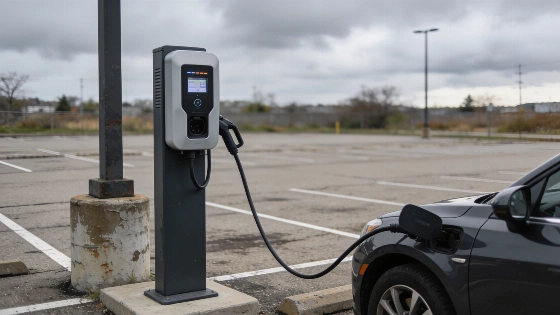
Michigan's charging network is expanding. That alone may not bring equal access to electric vehicles. Michigan Expands EV Infrastructure, but Access Remains Unequal, Study Finds asks whether the focus on charging-station locations left out another part of the access problem.
The distinction matters for public policy. A charging station is visible infrastructure. Access to the vehicles themselves is a separate question. The article asks readers to consider both points instead of treating a larger charging network as proof that EV use is equally available across the board.
No figures or specific communities appear in the roundup's description. The available search results also do not provide a verified state update that fills that gap. The takeaway is limited but clear: Michigan's EV expansion should be judged by charger placement and by who can realistically use electric vehicles. State of Michigan departmental registries and program pages remain the proper places to confirm current grant, permitting or infrastructure details.
That local check matters in Farmington-area discussions. A charger's usefulness depends on parking patterns, housing types, electrical capacity and travel needs. A statewide station count cannot answer all of those questions. Oakland County administration may provide regional context, but countywide figures should not be treated as a precise measure of conditions in either Farmington municipality.
Retailers rethink self-checkout
Retailers adopted self-checkout to cut costs. Merchandise loss created a problem they did not anticipate. Self-Checkout Was Supposed to Cut Costs. Instead, It Created a Problem Retailers Didn't Anticipate examines why stores are reducing their use of self-checkout aisles.
The issue is operational. A system meant to reduce expenses can create new losses when merchandise disappears. Retailers are also investing in other technology. The story is less about abandoning automation than about changing how stores use it.
Shoppers may notice the shift at the checkout line. The description does not identify particular retailers or say which replacement systems are being adopted. It does establish the reason for the change: merchandise loss altered the calculation behind self-checkout. Local observations should remain separate from a national retail trend unless a store or company confirms its own policy.
Goodall's lasting challenge
The available search results do not independently verify the article's biographical framing or any newly attributed statements. The safest reading is an interpretation of Goodall's values, not a confirmed official update. Rejecting human exceptionalism means questioning the idea that people should be understood as separate from or superior to other living creatures. The piece links her views on science to the way she approached the wider living world.
Schools and families may meet these themes in classroom discussions, library programming or animal-care questions. The Farmington Public Schools board and district communications are the proper places to confirm any local educational program, meeting item or curriculum connection. This roundup does not establish that the district has adopted a specific activity related to Goodall.
The five selections question easy assumptions. A working-class identity cannot be reduced to one demographic fact. A pet category does not answer every question about a child. More EV chargers do not automatically settle access. Self-checkout does not automatically lower retail costs. Goodall's career shows that scientific work can also carry a view of humanity's place among other living things.
The roundup does not force those subjects into one conclusion. Instead, the articles ask readers to look past the first visible measure, whether that measure is an identity label, a charging station, a checkout machine or scientific achievement. Each piece asks how a system works in practice. That is a useful standard for a reading list: concrete questions, limited claims and enough friction to make familiar subjects worth another look.
Residents who want to connect these national and statewide themes to local decisions should check agendas and notices directly. The school district calendar, municipal meeting materials from Farmington and Farmington Hills, Oakland County records and current Michigan departmental registries can establish dates, jurisdictions and program details that a reading roundup cannot. That discipline keeps broader commentary useful without turning unverified claims into local news.